
What, if Anything, is “Swimmer’s Shoulder?”
Shoulder injuries are the most common injuries in swimmers, with prevalence reported between 40% and 91%. PubMed Central But the anatomical source of that pain remains elusive — the term "swimmer's shoulder" can represent numerous different shoulder pathologies, including impingement syndrome, rotator cuff tendinitis, labral injuries, instability from ligamentous laxity or muscle imbalance, and nerve entrapment. NCBI Just as seemingly confounding, stroke preference has not been shown to correlate with the development of supraspinatus tendinopathy PubMed — there is no single movement pattern or stroke "deficiency" consistently associated with pain. So where do we go from here?
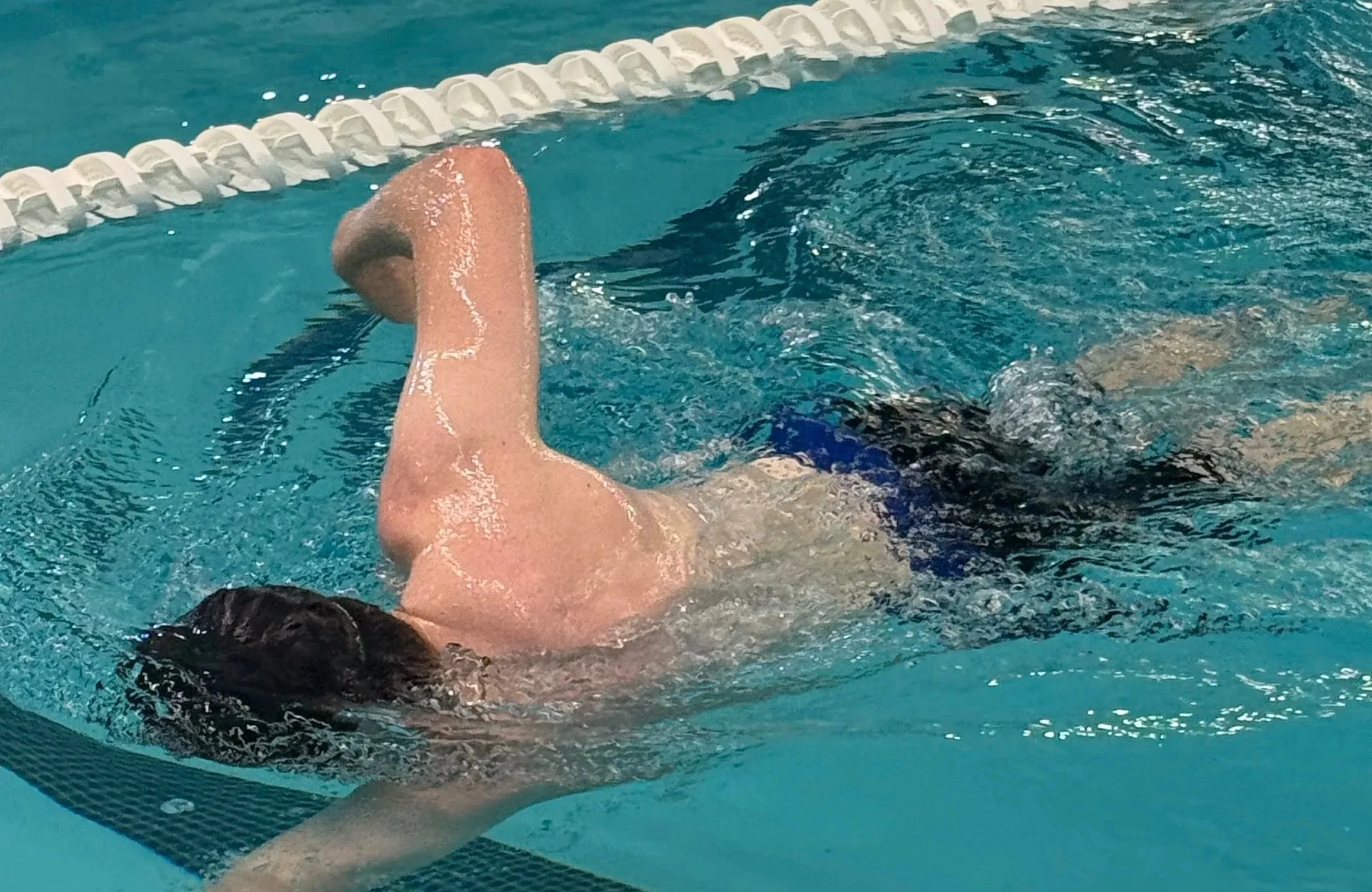
Most people with “swimmer’s shoulder” have very different anatomical findings on MRI….
…and the real reasons for their pain are typically multifactorial.
The story of shoulder pain in swimmers follows a similar pattern to that in many areas of the body — single body parts in isolation being blamed for a more systemic issue. The term "swimmer's shoulder" was first used by Kennedy and Hawkins in 1974 to describe impingement of the supraspinatus tendon, but has since expanded to encompass a wide range of shoulder pathologies. NCBI It is a single term referring to many different areas of the shoulder that can hurt. But the tale is the same — like back pain blamed on "degeneration" and "facet dysfunction," shoulder pain in swimmers probably has less to do with a rotator cuff or labrum tear than with a host of systemic factors. Indeed, a 2026 study in JAMA Internal Medicine found rotator cuff abnormalities in 96% of asymptomatic shoulders — and of all full-thickness tears identified, 78% were in people reporting no symptoms whatsoever. Physiotutors This mirrors findings across the broader population: asymptomatic rotator cuff tears are twice as common as symptomatic ones, and account for two-thirds of all tears in people over 60. PubMed MRIs all too often give the impression that the shoulder is hanging on by a thread.
So what does physical therapy for swimmers look like? We'll start by examining your relationship with swimming — the demands it makes on your shoulder, the recovery you grant it, and your beliefs surrounding the pain. The onset of symptoms may be associated with impaired posture, glenohumeral joint mobility, neuromuscular control, or muscle performance, as well as training errors such as overuse, misuse, or abuse. PubMed Central In the absence of trauma or neurological signs, physical therapy is the right place to be. We'll assess strength and mobility in key regions including the rotator cuff, scapular musculature, thoracic spine, and cervical spine; and finally we'll come up with a plan that blends specific exercise with mindset shifts and new habit patterns.
Physical therapy for swimmer's shoulder follows many similar clinical patterns, but the treatment is always different from one individual to another. One person might need more attention given to motor control of the periscapular muscles; one might need more attention given to thoracic extension mobility. Far more important, however, are the intricacies of life that come to affect each individual's experience. How do we need to shift training? What role is that training playing in one's identity? What are the beliefs and relationships around resistance training? One-on-one work allows us to pick apart the nuances behind what's driving your injury — that's why I only provide care in a one-on-one, individual-directed manner. Two people with "swimmer's shoulder" never have the same experience — or, I would argue, the same condition.
Check out this deep dive for even more information on current literature and best practices regarding swimmer’s shoulder. If you or someone you know is dealing with shoulder pain restricting their swimming, I’m here to help.
Sources
Sein et al., British Journal of Sports Medicine (2010) — shoulder pain in elite swimmers
StatPearls / NCBI Bookshelf — Swimmer's Shoulder (Kennedy & Hawkins 1974 origin)
Ibounig et al., JAMA Internal Medicine (2026) — rotator cuff abnormalities in asymptomatic shoulders
Minagawa et al., Journal of Orthopaedics (2013) — symptomatic vs. asymptomatic rotator cuff tears in the general population
Bak & Fauno, American Journal of Sports Medicine (1997) — prevention and treatment of swimmer's shoulder
