
Runner’s Knee : a Deep Dive
Physical Therapy for Runners in Arlington, VA
What Is Runner's Knee?
Runner's knee is the common term for patellofemoral pain (PFP), one of the most frequently diagnosed conditions in sports medicine and the most prevalent running-related injury seen in clinical practice. It is characterized by pain at the front of the knee, around or behind the kneecap (patella), that is provoked by activities that load the patellofemoral joint (PFJ) under knee flexion. According to theAcademy of Orthopaedic Physical Therapy's Clinical Practice Guideline, the diagnosis is established when a patient reports retropatellar or peripatellar pain that is reproduced during squatting, stair climbing, prolonged sitting, running, or other activities that load the PFJ in a flexed position, after other causes of anterior knee pain have been ruled out.Despite the name, runner's knee is not exclusive to runners. It is among the most common overuse injuries in cyclists and triathletes as well, and it affects both competitive and recreational athletes across a wide age range.If you are an endurance athlete in the Arlington, VA area dealing with anterior knee pain during running or cycling, evidence-based physical therapy is the most thoroughly supported treatment available.
References
Collins NJ, Barton CJ, van Middelkoop M, et al. Patellofemoral pain: clinical practice guidelines linked to the International Classification of Functioning, Disability and Health from the Academy of Orthopaedic Physical Therapy of the American Physical Therapy Association. J Orthop Sports Phys Ther. 2019;49(9):CPG1-CPG95.https://www.jospt.org/doi/10.2519/jospt.2019.0302
Xie P, István B, Liang M. The relationship between patellofemoral pain syndrome and hip biomechanics: a systematic review with meta-analysis. Healthcare. 2022;11(1):99.https://www.mdpi.com/2227-9032/11/1/99
Reiman MP, Bolgla LA, Wheeldon JC. Hip and knee strengthening is more effective than knee strengthening alone for reducing pain and improving activity in individuals with patellofemoral pain: a systematic review with meta-analysis. J Orthop Sports Phys Ther. 2018;49(9):695-710.https://www.jospt.org/doi/10.2519/jospt.2018.7365
Halabi Y, et al. The efficacy of hip and knee muscles strengthening versus knee muscle strengthening alone in managing patellofemoral pain syndrome: a systematic review and meta-analysis. Musculoskeletal Care. 2025.https://onlinelibrary.wiley.com/doi/10.1002/msc.70059
de Souza JR Jr, Rabelo PHR, Lemos TV, et al. Effects of two gait retraining programs on pain, function, and lower limb kinematics in runners with patellofemoral pain: a randomized controlled trial. PLOS ONE. 2024;19(1):e0295645.https://journals.plos.org/plosone/article?id=10.1371/journal.pone.0295645
Long-term prognosis of patellofemoral pain in adolescents and adults: a systematic review with meta-analysis and meta-regressions. medRxiv. 2026.https://www.medrxiv.org/content/10.64898/2026.04.27.26351023v1.full
Conservative treatment of patellofemoral pain: effectiveness of strength exercises compared to other treatments. A systematic review with meta-analysis. BMC Sports Science, Medicine and Rehabilitation. 2025.https://link.springer.com/article/10.1186/s13102-025-01297-x
Related Conditions in Endurance Athletes

Who Gets Patellofemoral Pain? Risk Factors
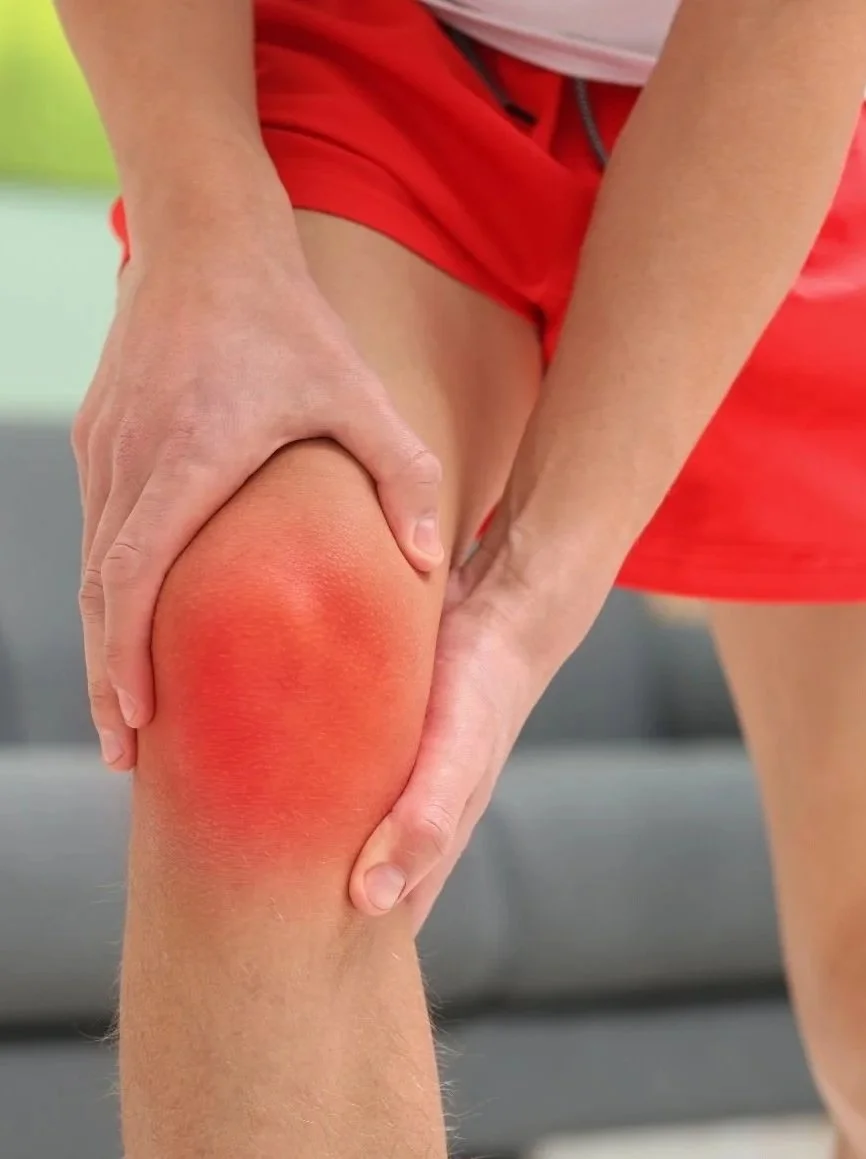
PFP is multifactorial, meaning no single cause explains every case. The research has identified a set of biomechanical, neuromuscular, and training-related risk factors that are most consistently associated with its development.
In Runners
Quadriceps weakness. The quadriceps, particularly the vastus medialis oblique (VMO), contribute directly to patellar forces. Deficits in quadriceps strength increase compressive loading at the PFJ, particularly during deceleration and downhill running.
Training load errors. A rapid increase in weekly mileage, elevation gain, or running intensity without adequate tissue adaptation time is a well-recognized precipitant. PFP often presents as a tissue capacity problem: the cumulative mechanical demand on the PFJ exceeds the rate at which the cartilage and subchondral bone can adapt.
Hip and proximal weakness. Reduced hip abductor and external rotator strength is one of the most replicated findings in the PFP literature. A 2023 systematic review with meta-analysis found that individuals with PFP demonstrated lower gluteus medius and gluteus maximus activation, reduced hip abductor strength, and increased peak hip adduction and internal rotation during loading tasks compared to pain-free controls. With that being said, this is only seen in cross-sectional study designs and is therefore not indicative of a causal relationship (these strength changes could occur AFTER PFP develops).
Frontal-plane running mechanics. Increased hip adduction and contralateral pelvic drop during the stance phase of running are associated with elevated lateral retropatellar contact stress. These movement patterns are addressable through targeted strengthening and gait retraining.
Female sex. Women are disproportionately affected by PFP, a finding that likely reflects differences in Q-angle, hip-to-knee alignment, and hormonal influences on connective tissue. The bibliometric analysis of 23 years of PFP research identified female runners as a dominant research focus and high-risk subgroup.
In Cyclists
Cycling is a low-impact sport in terms of joint reaction forces per stride, but the repetitive nature of the pedal stroke (often 5,000 or more revolutions per hour) means that even small biomechanical inefficiencies may accumulate into significant cumulative load. The research here is much more sparse than in runners, and much of it is therefore based more in biomechanical theory than direct research.
Saddle height. This is the most commonly implicated bike fit variable in anterior knee pain. A saddle that is too low forces the knee into excessive flexion at the bottom of the pedal stroke, substantially increasing patellofemoral compressive forces. Biomechanical research consistently supports a knee flexion angle of approximately 25 to 30 degrees at the bottom dead center of the pedal stroke as the target range for both comfort and joint loading. Angles exceeding 40 degrees are associated with significantly higher PFJ stress and a greater likelihood of anterior knee pain.
Saddle fore-aft position. A saddle positioned too far forward places the knee in an excessively anterior position relative to the pedal axle, increasing the moment arm and compressive demand on the PFJ during the power phase of the pedal stroke.
Cleat alignment. Cleats that are internally rotated or that do not permit adequate float can force the tibia into abnormal rotational positions throughout the pedal stroke, altering patellar tracking and increasing PFJ stress.
Rapid volume or intensity increases. As with running, a sudden spike in cycling volume, power output, or hill work is a common precipitant. PFP in cyclists frequently follows training camp weeks, early-season ramp-ups, or transitions from indoor to outdoor riding with increased real-world load.
Common Myths & Misconceptions about Runner’s Knee
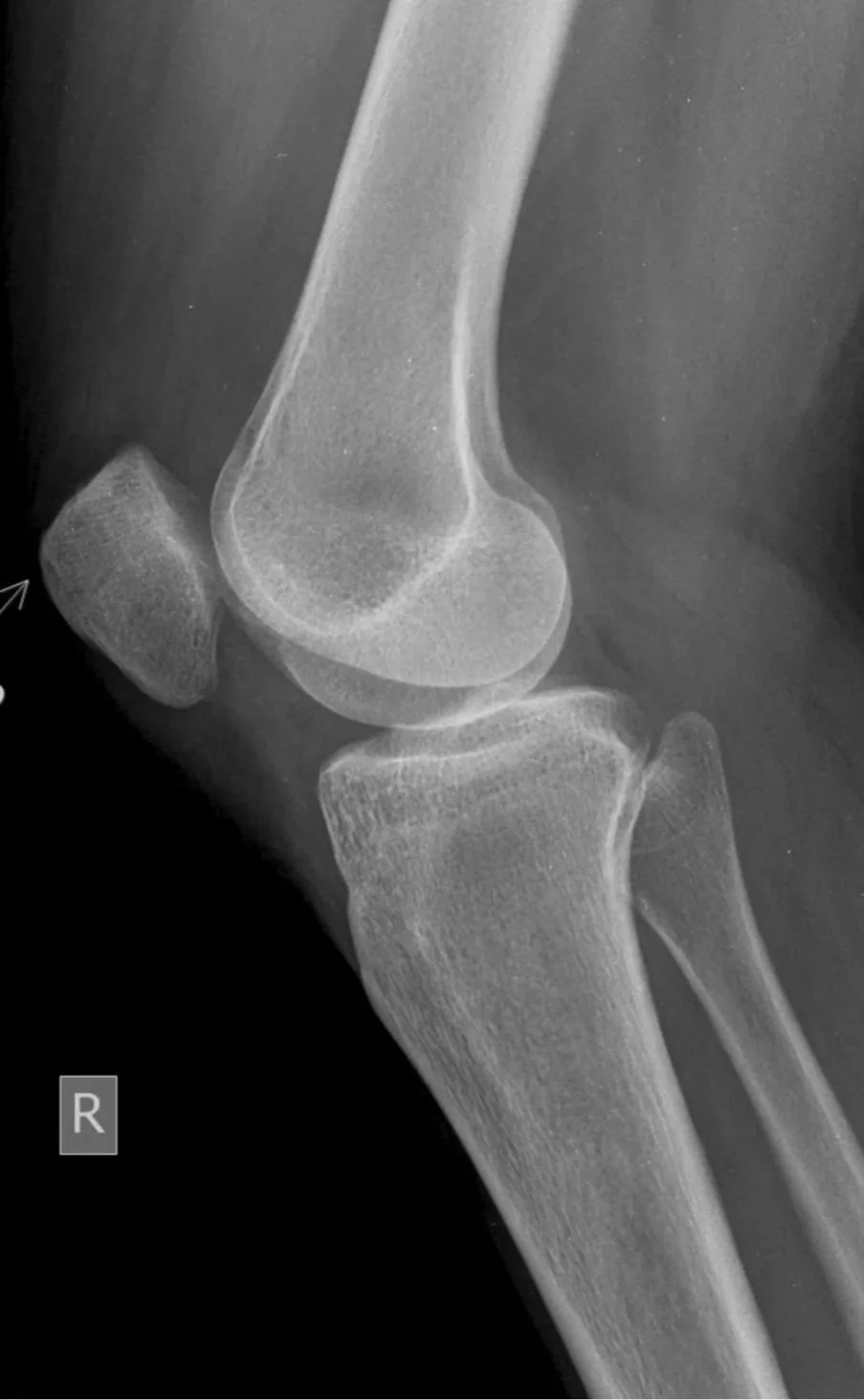
Imaging should never be ordered for runner’s knee unless a fracture or malignancy is suspected.
-
This framing, while common in clinical settings and on the internet, is not well supported by the evidence. The concept of "patellar maltracking" as the primary driver of PFP has been substantially revised in the research literature. TheAPTA Clinical Practice Guideline for PFP emphasizes that PFP is a multifactorial condition best understood through subgroup-specific impairments (including muscle performance deficits, movement control deficits, and mobility impairments) rather than through a structural maltracking narrative. Effective treatment does not require "fixing" the patella; it requires addressing the underlying load management, neuromuscular, and movement control factors that are driving symptoms.
-
Complete rest is rarely the answer, and activity avoidance carries its own costs. Research shows that PFP is not reliably self-limiting:a recent systematic review with meta-analysis found that while pain and function generally improve over the first 12 months, a considerable proportion of individuals continue to report persistent symptoms, with some studies following patients for five or more years showing highly variable outcomes. Studies suggest that more than 50% of individuals still report symptoms beyond five years after diagnosis. A structured rehabilitation program is more effective than passive rest in producing durable improvement, and maintaining appropriate activity levels supports tissue adaptation.
-
PFP is defined as a clinical syndrome, not a structural diagnosis. Many people with significant anterior knee pain have unremarkable imaging findings, and many asymptomatic individuals have cartilage changes on MRI. The evidence strongly supports treating PFP through a functional and load-management framework rather than a pathoanatomical one. The structural state of the cartilage is one piece of the picture, but it does not determine prognosis or treatment approach in most cases.
-
Isolated VMO strengthening exercises (such as terminal knee extensions at narrow angles) were historically a centerpiece of PFP treatment. The current evidence base indicates that combined hip and knee strengthening produces superior outcomes compared to knee-focused strengthening alone. Asystematic review with meta-analysis published in JOSPT found that the addition of hip strengthening to knee strengthening was more effective for reducing pain and improving function in individuals with PFP. A2025 systematic review and meta-analysis further confirmed this finding. VMO training has a role, but it is not a standalone treatment strategy.
-
Foot orthoses are a supported adjunct treatment in the APTA CPG, particularly for patients who demonstrate foot mobility impairments or who respond positively to a clinical trial of prefabricated orthoses. However, orthoses are a component of a multimodal treatment plan, not a primary solution. The research suggests they are most useful in a subgroup of patients, not universally effective, and they are not a substitute for addressing the proximal and neuromuscular factors that are typically the primary drivers of PFP.
What the Evidence Says About Treatment
The2019 APTA Clinical Practice Guideline for Patellofemoral Pain is the most comprehensive clinical resource currently available for guiding treatment decisions. It recommends a multimodal, patient-specific approach. The following interventions have the strongest evidence base.
Combined Knee and Hip Strengthening Exercises
This is the most well-supported active treatment for PFP. The evidence across multiple systematic reviews and meta-analyses consistently shows that knee strengthening with OR without hip strengthening reduces pain, improves function, and supports return to activity. Clinically, this means progressive loading of the quadriceps and hamstrings alongside the hip abductors, external rotators, and extensors (gluteus medius, gluteus maximus, hip external rotators) in positions and ranges that are meaningful for running and cycling. The specific program should be tailored to the individual's current strength profile, movement patterns, and activity goals.
A 2025 systematic review with meta-analysis found that strengthening exercise programs, particularly those incorporating both hip and knee work, produced clinically meaningful reductions in pain at 4 to 6 weeks and 8 to 12 weeks follow-up. The mean pain reduction in favor of exercise was consistent and statistically significant across included trials. Interestingly, strength gains do not seem to be necessary for improvement in pain, supporting that cortical retraining and desensitization of peripheral pain pathways may be involved.
Exercise selection and patellofemoral joint loading
Not all strengthening exercises impose the same demand on the patellofemoral joint, and understanding that variation is practically important for building a rehabilitation progression. A foundational biomechanics study by Steinkamp et al. (1993, AJSM) compared PFJ reaction force, stress, and moment during leg press (CKC) and leg extension (OKC) in 20 subjects across four knee flexion angles. The crossover finding is clinically relevant: at 0° and 30° of knee flexion, all three loading parameters were significantly greater during OKC leg extension than during the CKC leg press (p < 0.001). At 60° and 90° of knee flexion, the reverse was true, with all parameters significantly greater during the leg press. The stress crossover point was approximately 48° of knee flexion. The practical implication is not that one modality is categorically safer than the other, but that each creates a distinct loading profile across the range of motion, and that the range in which an exercise is performed matters as much as whether it is OKC or CKC.
A more recent study extended this framework to 35 weightbearing rehabilitation exercises. Song et al. (2023, AJSM) quantified PFJ loading using a composite index of peak force, loading impulse, and loading rate, ranking exercises from lowest to highest overall demand. Key findings relevant to PFP rehabilitation include: fast, low-amplitude activities like running and single-leg hops generated moderate peak forces but low cumulative impulse due to brief ground contact times, placing them in a lower loading tier overall; deeper and slower loaded squat variations sat at the high end of both peak force and impulse; and a slow isometric variation (three-second Spanish squat hold) produced the highest loading impulse of all 35 exercises despite not reaching the highest peak force, demonstrating that tempo and time under tension contribute independently to total joint load. This evidence supports building a PFP exercise progression around both the magnitude and duration of loading, not peak force alone, and provides a rational basis for sequencing exercises from low to high demand as symptom tolerance allows.
Gait Retraining for Runners
For runners specifically, gait retraining is an evidence-supported intervention that addresses the biomechanical contributors to PFP that strengthening alone may not fully correct. Two strategies have the most research support:
Step rate modification. Increasing running cadence by approximately 7.5 to 10% above an individual's preferred step rate reduces peak knee extensor moment, peak patellofemoral joint stress, and associated kinematic variables including peak hip adduction and knee flexion. A2024 randomized controlled trial published in PLOS ONE found that a two-week gait retraining program using cadence increases reduced pain levels, and results from similar studies have been maintained at six-month follow-up. One earlier study found that a 10% step rate increase improved both running kinematics and clinical outcomes at 4 weeks and 3 months. Importantly, step rate changes are not universally effective, and the response is individual: some runners see an immediate improvement in symptoms while others do not, which underscores the importance of individualized assessment.
Strike Pattern. For runners with persistent pain and who exhibit either a heel OR forefoot strike pattern, a midfoot strike pattern may be adopted to reduce stress on the anterior knee..
Load Management
No intervention works without attention to load. PFP frequently exists at a threshold where the tissues are close to their adaptive capacity. Effective physical therapy includes a structured approach to modifying training load, determining what volume and intensity can be tolerated without provoking or worsening symptoms, and systematically building back toward full training. For endurance athletes, this means treating the training program as part of the clinical picture, not just the impairments in the clinic.
Bike Fit for Cyclists
For cyclists experiencing PFP, a professional bike fit that addresses saddle height, saddle fore-aft position, and cleat alignment is an integral component of treatment. The biomechanical evidence supports optimizing knee flexion angle at the bottom of the pedal stroke (approximately 25 to 30 degrees) as a primary intervention for anterior knee pain. Changes to bike fit should be considered alongside, not instead of, a strengthening and load management program.
Patellar Taping and Bracing
The APTA CPG supports the use of patellar taping (McConnell taping or Kinesio taping) as an adjunct intervention, particularly in the early stages of treatment when it can provide symptom relief that allows earlier loading and exercise progression. The evidence for taping is moderate in quality and the effect appears to be primarily symptom-modulating rather than corrective. Patellar bracing has a similar if slightly less compelling evidence profile. Neither should be viewed as a primary treatment strategy.
Foot Orthoses
Prefabricated foot orthoses are a recommended adjunct for patients whose PFP is associated with foot and ankle mobility impairments. A brief clinical trial with prefabricated orthoses can help identify patients who are likely to benefit. Custom orthoses may be appropriate in specific cases but are not the default recommendation for all patients with PFP. There is NO foot profile (eg flat vs high arches) that benefits more from foot orthoses than another.
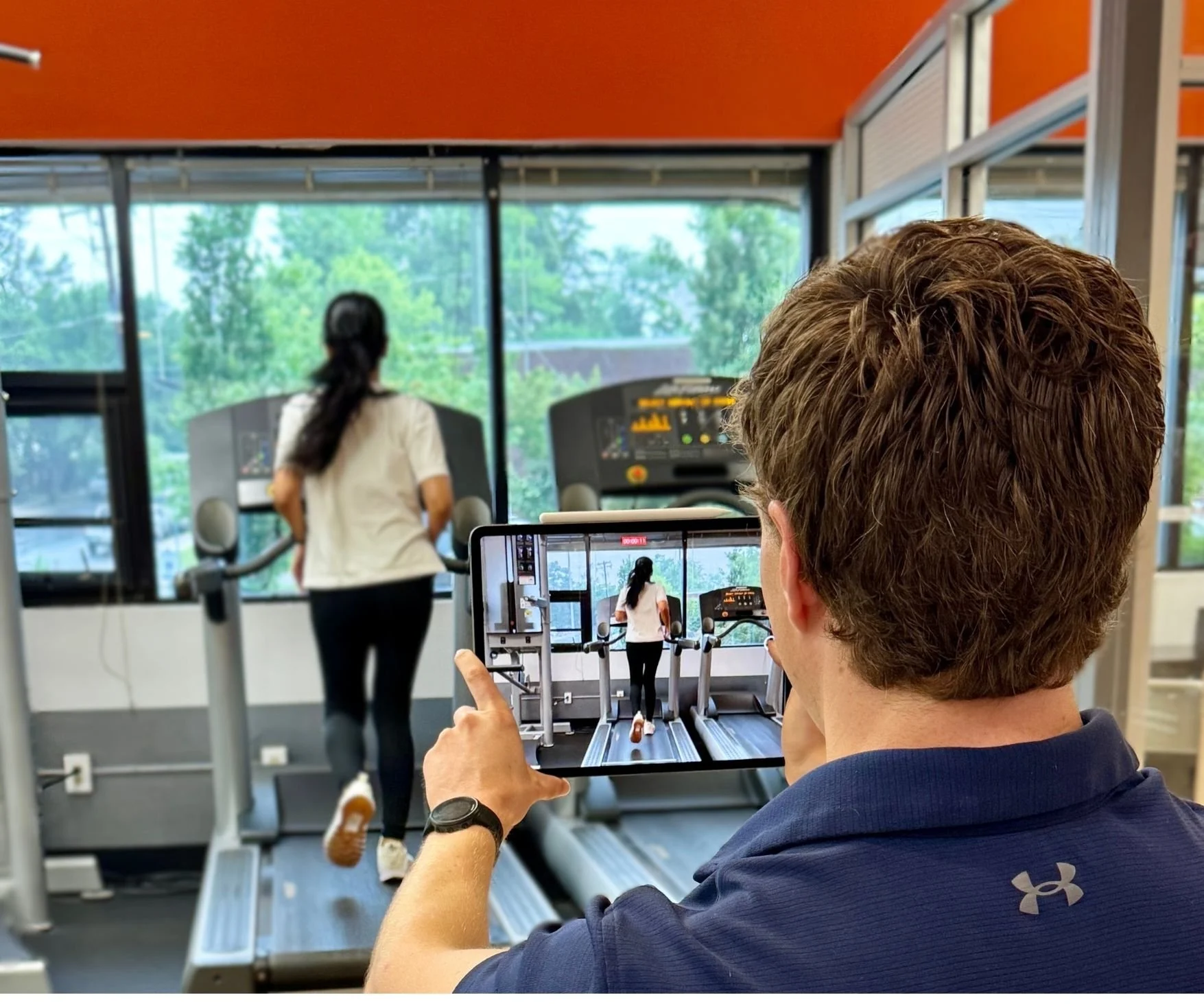
Slight gait modifications can help offload the anterior knee. These changes aren’t meant to “fix” a persons run, and may even be temporary.
What to Expect From Physical Therapy at Persist PT
At Persist PT in Arlington, VA, the evaluation process for runner's knee begins with a full understanding of your training history, load patterns, and goals. This is not a generic knee pain protocol. Assessment includes movement screening (single-leg squat, step-down, landing mechanics), running or cycling-specific movement analysis as appropriate, and strength evaluation at the hip, knee, and ankle.
Treatment is individualized based on which impairments and subgroups apply to you. Athletes with primarily proximal weakness receive a different program than athletes whose main driver is load management or gait mechanics. For cyclists, bike fit assessment is integrated into the clinical picture rather than treated as a separate silo.
Physical therapy for runner's knee in Arlington, VA at Persist PT is a cash-pay, one-on-one practice, meaning your entire session is spent with your physical therapist, your program is specific to your anatomy and your sport, and the focus is always on getting you back to full training, not just pain reduction.
Frequently Asked Questions
Can I keep running with patellofemoral pain?
In many cases, yes, with modification. The goal of treatment is not to stop you from running but to identify the load level at which your symptoms are manageable and build from there. Complete rest tends to delay recovery and does not address the underlying factors. Your physical therapist can help you establish a training framework that allows continued activity while the condition is being addressed.
How long does runner's knee take to resolve?
Timelines vary based on how long symptoms have been present, the severity of the underlying impairments, and how consistently the rehabilitation program is implemented. Symptoms that have been present for less than three months generally respond more quickly than chronic presentations. Meaningful improvement is typically seen within 6 to 12 weeks of consistent, targeted treatment, though full return to unrestricted training may take longer. The research on long-term prognosis reinforces that outcomes are better with structured treatment than with watchful waiting, and that early intervention tends to produce more favorable results.
Is runner's knee the same as patellofemoral osteoarthritis?
They are distinct conditions, though some research suggests that inadequately managed PFP may increase the long-term risk of patellofemoral osteoarthritis. This is one reason that the "wait and see" approach is not well supported by the evidence: PFP that persists without treatment is not benign.
I am a cyclist, not a runner. Can I still get runner's knee?
Yes. The term "runner's knee" is a colloquial label; the underlying condition (patellofemoral pain) is common in cyclists, triathletes, and anyone who loads the PFJ repeatedly. The specific contributing factors differ between sports, which is why assessment and treatment need to be sport-specific.
Book a Free 15-Minute Discovery Call
Schedule a 15-minute call with a Doctor of Physical Therapy.