
Do Your Running Shoes Actually Matter? What the Evidence Says
By Dr. Greg Lemek, DPT | Persist Physical Therapy | Arlington, VA
If you've ever felt a familiar twinge in your knee or a creeping tightness in your Achilles, there's a good chance your first thought was: it must be my shoes.
You're not alone. When runners walk in with an injury, footwear is one of the most common things that comes up early in the conversation. It's often one of the first things a runner has already changed (or is actively considering changing) before they even book an appointment. Shoes feel like a fixable problem. You can research them, try them on, buy new ones, and feel like you've done something. When the real culprits behind a running injury (training load, sleep, stress, strength deficits) are more abstract and harder to confront, shoes offer a reassuringly tangible lever to pull.
But the evidence tells a more nuanced story.
What the Research Actually Says: Comfort Is King
One finding that surprises most runners: the best available evidence for injury reduction in running footwear points to comfort as the most important factor. Not cushioning level, heel-toe drop, or "stability" versus "neutral."
A prospective study published in PMC found that cushioning perception and overall shoe appreciation were directly associated with injury risk in recreational runners. Runners whose shoes “felt right” had meaningfully lower injury rates (Malisoux et al., European Journal of Sport Science, 2024).1 Researchers from Frontiers in Sports and Active Living reached a similar conclusion, noting that the scientifically supported general recommendation is simply to choose the lightest and most comfortable shoe with the least amount of pronation control technology (Napier & Willy, 2022).2
This is counterintuitive in a marketplace that sells shoes on the basis of technology, pronation control, and maximalist cushioning. In reality, data repeatedly goes against conventional marketing tropes. As the same research review notes, despite decades of evolving shoe technology, the scientific community generally agrees that running shoe technology's role in injury prevention has probably been largely overrated.2 What does show up in the research, consistently, is that individual preference matters.
If you're already in a shoe that feels great to run in, the instinct to swap it out at the first sign of injury may not be the right call.
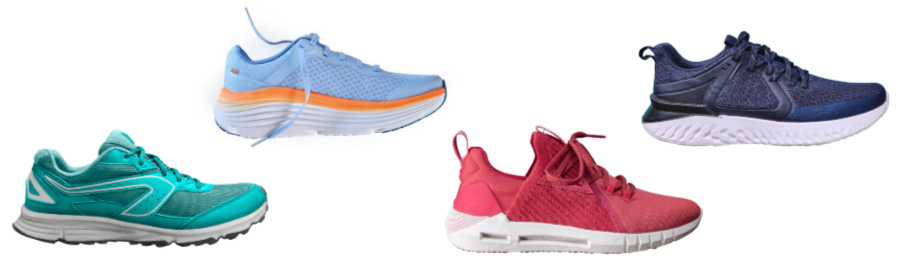
Neutral, stability, minimalist, rocker bottomed… which is really the best? Or is the answer more nuanced?
So Why Do Runners Go Straight to the Shoes?
This is something I think about a lot. Shoes are visible, purchasable, and feel like a logical explanation. Running injuries often arise from a more uncomfortable set of truths: when we ramp mileage up too fast, haven't been sleeping enough, or are experiencing high life stress our body tends to start paying the price. These factors are harder to sit with, and harder to fix quickly.
A new shoe, on the other hand, costs about 90 minutes and $150 and generates an immediate sense of progress. Changing your training structure, addressing a movement deficit, or acknowledging that you're overtired requires more vulnerability and patience.
Running shoes are worth thinking about - but I often see runners cycle through several pairs of shoes while the actual driver of their injury goes unaddressed. The shoes keep changing, but the injury stays.
Where Shoes Do Matter: Specific Situations
All of that said, footwear absolutely has a role to play in the management of certain injuries. Think of it less as "the right shoe for running" and more as "the right shoe for your current body and situation." A few examples:
Heel-toe drop and Achilles/knee pain
The drop of a shoe (the height difference between the heel and the forefoot) influences how load is distributed up the chain. A 2021 biomechanical study in Applied Sciences found that running in shoes with a larger heel-to-toe drop reduces loading on the Achilles tendon and calf by minimizing the net ankle moment during running.3 Conversely, lower-drop shoes shift more demand onto the foot and ankle, which can be useful for reducing stress at the front of the knee. Podiatry Today summarizes the clinical consensus well: runners with a history of Achilles or calf issues may benefit from a greater heel-to-toe differential, while those with chronic knee pain may benefit from a gradual transition toward lower drop.4 Neither is universally better, but in the context of a specific injury, drop can be a useful dial to turn.
Rocker bottom soles and big toe stiffness
A rocker-bottom shoe (one with a curved, rolling sole) can be a real game-changer for runners dealing with hallux rigidus or a stiff first MTP joint. By reducing the need for the big toe to extend at push-off, it allows the foot to roll through its gait cycle with far less provocation at that joint.
Wide toe boxes and forefoot pain
Bunion pain, Morton's neuroma, and other forefoot issues often respond well to simply giving the toes more room. A wide toe box decreases compression across the metatarsals and can meaningfully reduce symptoms during a run.
Cushioning and plantar fascia pain
More cushioned shoes can reduce mechanical load on the plantar fascia, which helps when that tissue is acutely irritated. This is one situation where a more cushioned shoe may have a genuine short-term role. A large-scale study of over 800 leisure-time runners covering more than 220,000 km found that those in lower-cushioned shoes had a 52% higher injury risk, with injuries concentrated at the ankle, knee, and lower leg (Malisoux et al., Luxembourg Institute of Health, 2017–2020).5
Minimalist shoes and cadence
On the other end of the spectrum, lighter and lower-profile shoes tend to encourage a quicker cadence and a more midfoot or forefoot contact pattern. A PMC-published study found that wearing minimalist footwear produced a statistically significant increase in cadence and a corresponding reduction in stride length compared to traditional shoes.6 For some runners working on gait retraining, this can be a useful tool, although it's one to approach gradually, as it shifts load onto structures that may not be conditioned for it.
The Heel Strike vs. Forefoot Strike Debate
While we're on the subject: runners often ask whether they should be landing on their heel or their forefoot. The evidence here is more nuanced than the debate suggests. As one thorough summary puts it, changing foot strike patterns may shift where injuries occur, but it won't eliminate injuries. The overall injury rate is similar between patterns:7 forefoot striking redistributes load away from the knee and toward the foot, shin, and Achilles; heel striking does the opposite.
What this means practically: if one of those areas is currently your trouble spot, a conversation about foot strike may be worthwhile. But overhauling a foot strike that isn't causing the brunt of the issue, especially in the middle of a training cycle, is unlikely to help and carries its own transition risks.
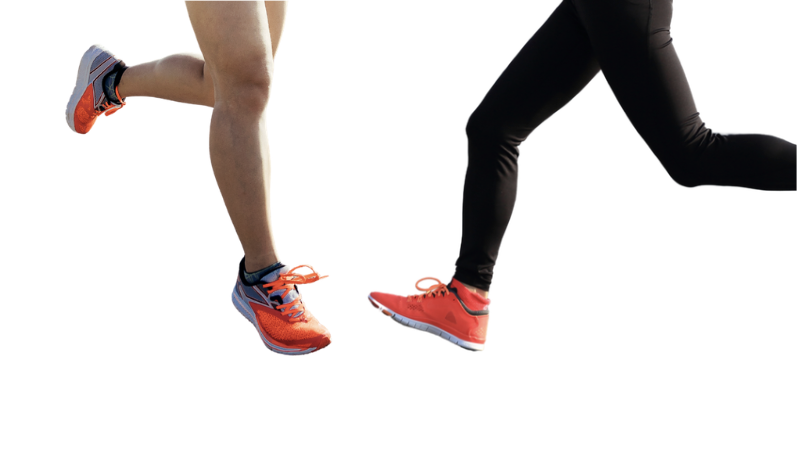
Is a heel strike or a forefoot strike superior?
Turns out, neither one decreases (or increases) your risk of injury.
What This Means for Your Injury
If you're a runner dealing with pain and wondering whether your shoes are to blame, here's take:
Your shoes might be a small part of the picture. In certain injury contexts, a targeted footwear modification can genuinely help, and I'll work through those specifics with you. But shoes are rarely the whole answer, and changing them without addressing the underlying factors driving your injury is likely to lead to frustration.
The more productive questions are usually: What changed recently in your training? Where are your strength or mobility limitations? How is your recovery? What does your overall load look like?
At Persist Physical Therapy, I take the time to actually work through these questions rather than start you on a list of exercises you could find on youtube and send you on your way. If you're a runner in the Arlington area dealing with a nagging injury, I'd love to help you get to the bottom of it.
Dr. Greg Lemek, DPT, OCS is the founder of Persist Physical Therapy, located inside Strive Fitness Studio at 5130 Wilson Boulevard, Arlington, VA 22205. Persist PT specializes in working with endurance athletes and active adults who want non-rushed, one-on-one care.
🌐 Homepage
Sources
Malisoux L, et al. "Association of Shoe Cushioning Perception and Comfort With Injury Risk in Leisure-Time Runners: A Secondary Analysis of a Randomised Trial." European Journal of Sport Science, 2024. https://pmc.ncbi.nlm.nih.gov/articles/PMC12541242/ ↩
Napier C, Willy RW. "Running Injury Paradigms and Their Influence on Footwear Design Features and Runner Assessment Methods." Frontiers in Sports and Active Living, 2022. https://www.frontiersin.org/journals/sports-and-active-living/articles/10.3389/fspor.2022.815675/full ↩ ↩2
Xu D, et al. "Biomechanical Analysis of Running in Shoes with Different Heel-to-Toe Drops." Applied Sciences, 2021. https://www.mdpi.com/2076-3417/11/24/12144 ↩
"How Does Heel-to-Toe Drop in Running Shoes Impact Heel Pain?" Podiatry Today, HMP Global Learning Network. https://www.hmpgloballearningnetwork.com/site/podiatry/case-study/how-does-heel-toe-drop-running-shoes-impact-heel-pain ↩
Luxembourg Institute of Health. "New Large-Scale Study to Investigate Running Shoe Cushioning and Injury Prevention." April 2025. https://www.lih.lu/en/article/new-large-scale-study-to-investigate-running-shoe-cushioning-and-injury-prevention/ ↩
Gillinov SM, et al. "The effect of minimalist footwear and instruction on running: an observational study." PMC, 2017. https://pmc.ncbi.nlm.nih.gov/articles/PMC5530131/ ↩
Daoud AI, et al. "Foot Strike and Injury Rates in Endurance Runners: A Retrospective Study." Medicine & Science in Sports & Exercise, 2012; with reference to subsequent systematic reviews. https://scholar.harvard.edu/files/dlieberman/files/2012b.pdf
